Disclosure: This article contains affiliate links. If you buy through them, I may earn a commission at no extra cost to you. I only recommend tools I’ve researched carefully, and my opinions are my own. Read the full disclaimer.
You’ve probably read hundreds of blog posts without thinking about it: a recipe, a product review, a guide to fixing a phone. Each of those came from a blog.
Blogging is also one of the most common ways people try to earn online. But most articles about it either make it sound too easy or skip the hard parts.
So, what is blogging? In this guide, I’ll explain what it is, how it works step by step, what it costs, how bloggers actually make money, and whether it’s still worth starting in 2026, with honest numbers and no hype.
Quick answer
- Blogging means regularly publishing articles (posts) on a website, usually to teach, review or share experience on one topic.
- How it works: you write posts, publish them on your blog, people find them through Google and social media, and some of them come back.
- What you need: a blogging platform (usually WordPress), a domain name and web hosting, or a free platform like Blogger to test.
- How bloggers earn: ads, affiliate links, services, digital products and sponsorships. None of these is guaranteed.
- Time: most blogs take months, often a year or more, before they earn meaningful money.
If you’re ready to start a self-hosted WordPress blog, Hostinger sells hosting with a free domain for the first year. Use code SK20 at checkout.
In this guide
- What is a blog?
- Blog vs website: what’s the difference?
- How does blogging work?
- What do you need to start a blog?
- Free vs self-hosted blogs
- Types of blogs
- How do bloggers make money?
- How long does it take to earn?
- Is blogging still worth it in 2026?
- Blogging from anywhere: what to check in your country
- Pros and cons of blogging
- Who blogging is for (and who it’s not)
- How I researched this guide
- Final thoughts
- FAQ
What is a blog?
A blog is a website, or part of a website, where new articles are published regularly. Each article is called a post, and posts are usually shown with the newest first.
The word comes from “weblog”, an online log. Early blogs in the 1990s were personal diaries. Today, most successful blogs are useful resources: guides, tutorials, reviews and news on one topic.
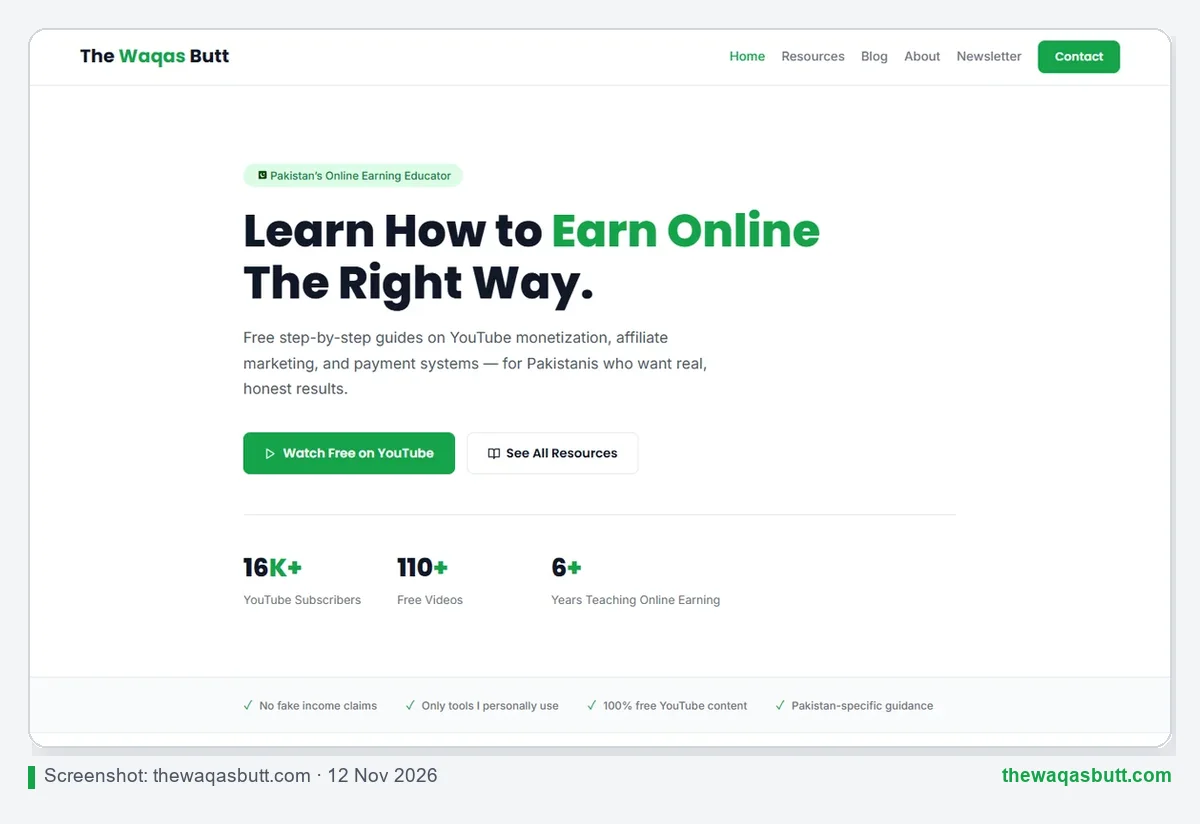
This website, thewaqasbutt.com, is a blog too. It publishes guides and reviews about earning online, for readers around the world.
A person who writes a blog is a blogger. Blogging is the work of planning, writing, publishing and promoting those posts.
Blog vs website: what’s the difference?
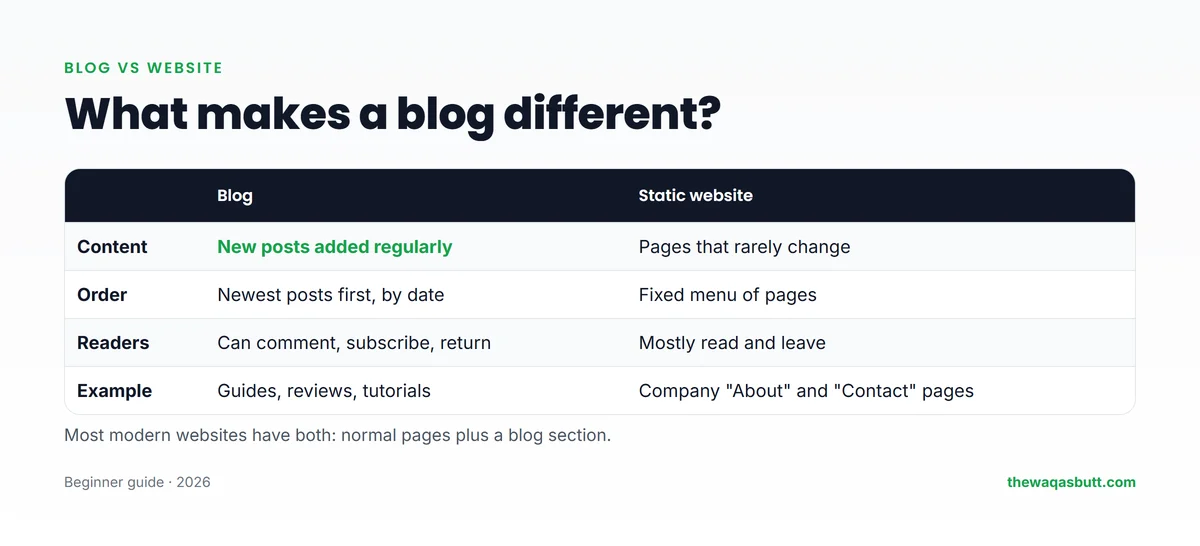
Every blog is a website, but not every website is a blog. The difference is how the content changes.
- A static website has a fixed set of pages, like Home, About, Services and Contact, that rarely change.
- A blog keeps growing. New posts are added every week or month, organized by date, category and tags.
- A blog usually lets readers comment, subscribe and return for new posts.
Most business websites today have both: normal pages plus a blog section. The blog brings in visitors from Google, and the pages turn them into customers.
How does blogging work?
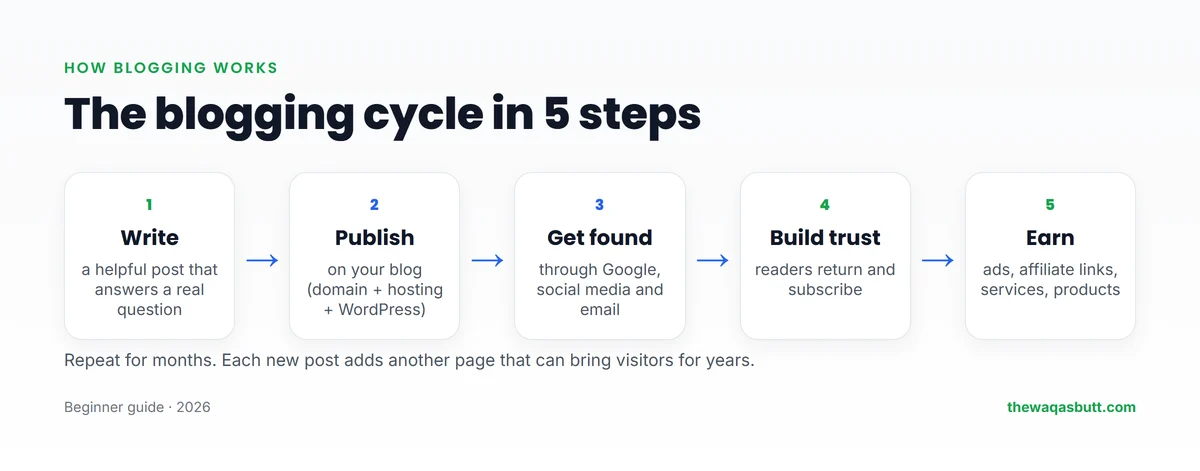
Here is the basic cycle every blog follows, from the first post to the first dollar.
- You write a post that answers a real question people search for, such as “how to open a Payoneer account”.
- You publish it on your blog using a content management system (CMS) like WordPress.
- People find it through Google search, social media, YouTube or your email newsletter.
- Readers trust you when the post really helps. Some subscribe, share or come back.
- You earn through ads, affiliate links, your services or your own products.
The important part is that posts keep working. A helpful post written today can bring visitors for years, while you keep adding new ones.
What happens behind the scenes?
Technically, a blog has three parts:
- A domain name, your blog’s address, like yourblog.com.
- Web hosting, the server where your posts, images and database are stored.
- A CMS such as WordPress, the software you use to write, edit and publish posts without coding.
If those terms are new, read my beginner guide to domain names and web hosting. For the technical side of connecting them, see DNS records explained.
What do you need to start a blog?
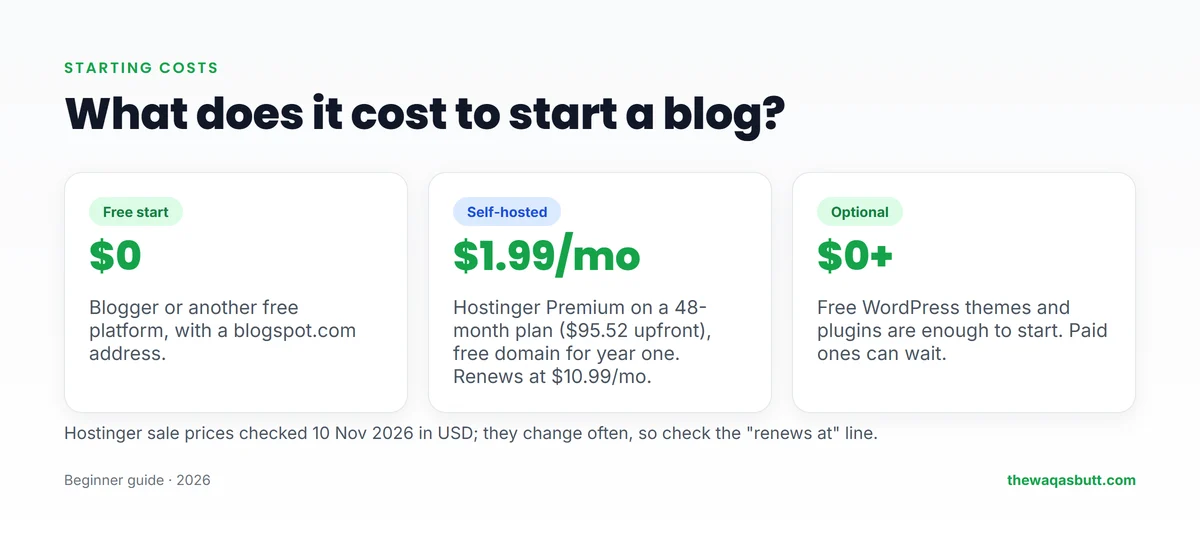
You need less than most people think:
- A topic (niche) you can write about for a long time.
- A platform: WordPress for a serious blog, or a free platform to test.
- A domain and hosting if you choose self-hosted WordPress.
- Time: a few hours a week to write, consistently.
- Basic skills you’ll learn on the way: writing clearly, simple SEO and editing images. No coding is needed.
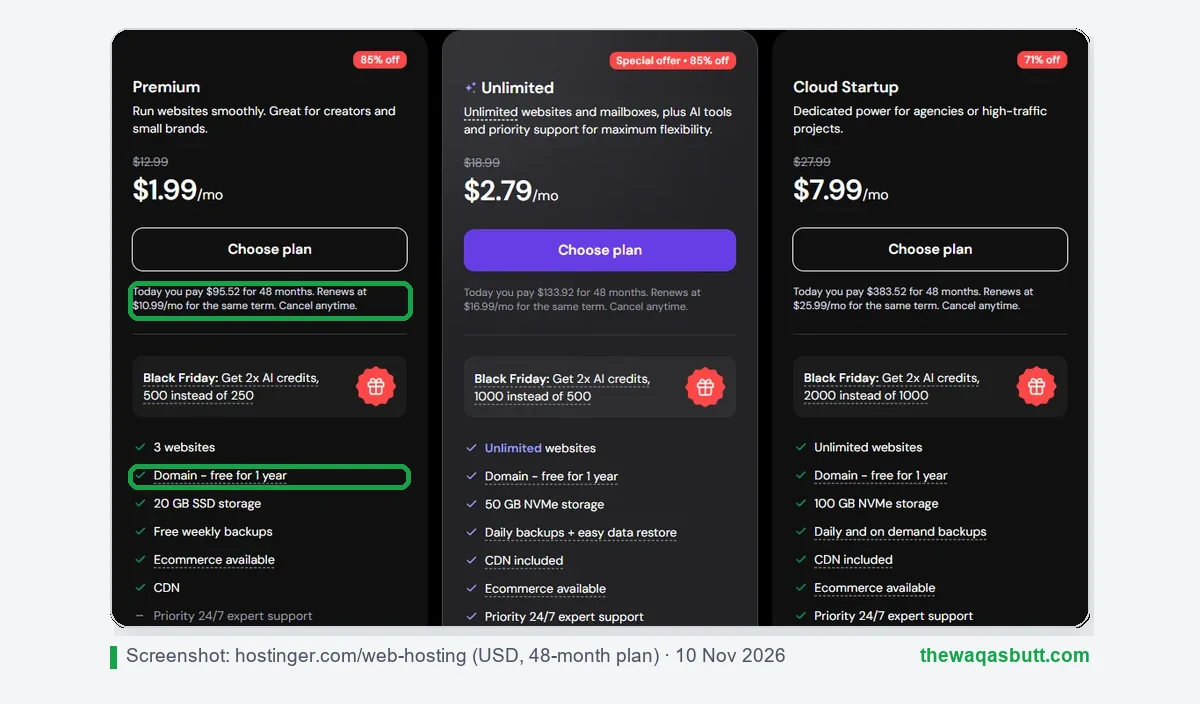
For self-hosted WordPress, the main cost is hosting. When I checked on 10 November 2026, during a sale, Hostinger’s Premium plan cost $1.99 a month on a 48-month term ($95.52 upfront), with a free domain for the first year. It renews at $10.99 a month, so plan for that.
Free vs self-hosted blogs
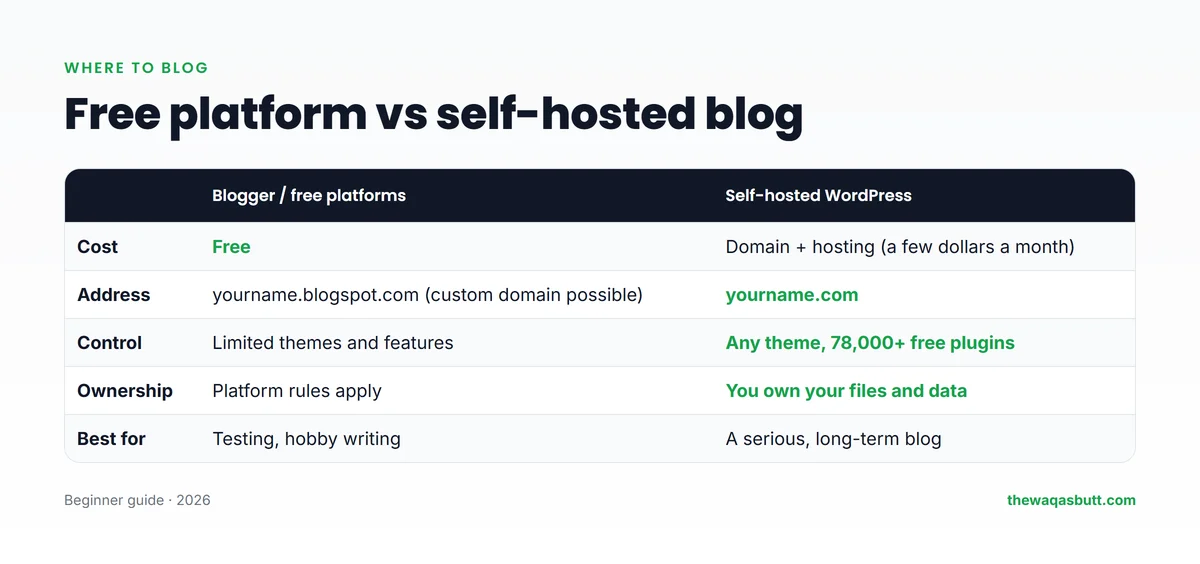
You have two main choices for where your blog lives.
Free platforms (like Blogger)
Blogger is Google’s free blogging platform. You can start in minutes with an address like yourname.blogspot.com.
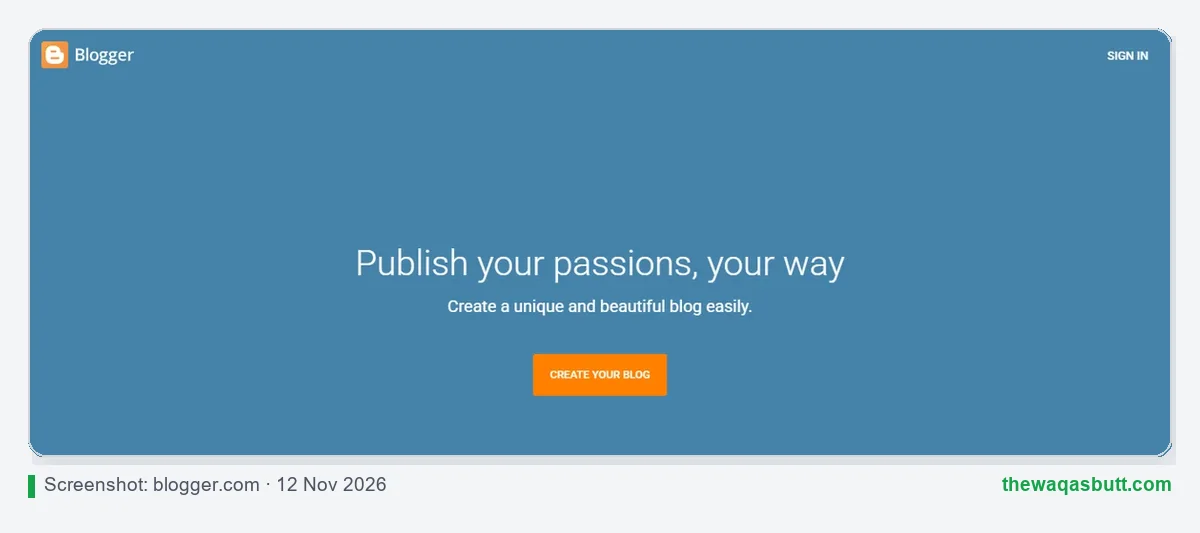
It’s good for testing whether you enjoy writing. The downside is limited design and features, and you play by the platform’s rules.
Self-hosted WordPress
WordPress is free, open-source software you install on your own hosting. According to W3Techs, it powers 39.2% of all websites (November 2026), more than any other system.
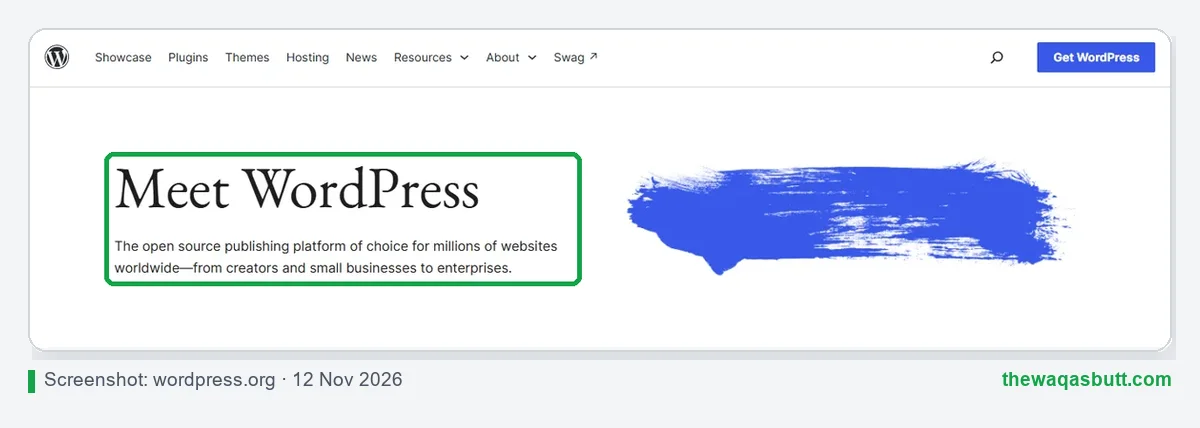
You can choose any theme and add features with plugins. The official directory lists over 78,000 free plugins. You pay for hosting, but you own your blog and can move it anytime.
Note: WordPress.org is the free software you self-host. WordPress.com is a separate hosted service with free and paid plans. This guide means WordPress.org.
Types of blogs
Most blogs fall into a few common types:
- Niche blogs: focused on one topic, such as personal finance, tech or cooking.
- Review and affiliate blogs: compare and review products, and earn commissions.
- Tutorial blogs: step-by-step guides, like this one.
- Business blogs: a company’s blog that brings in customers.
- Personal blogs: experiences, travel or opinions, usually harder to monetize.
- News blogs: fast updates on an industry, which need a lot of daily work.
For beginners who want to earn, a focused niche you know well usually works better than writing about everything.
How do bloggers make money?
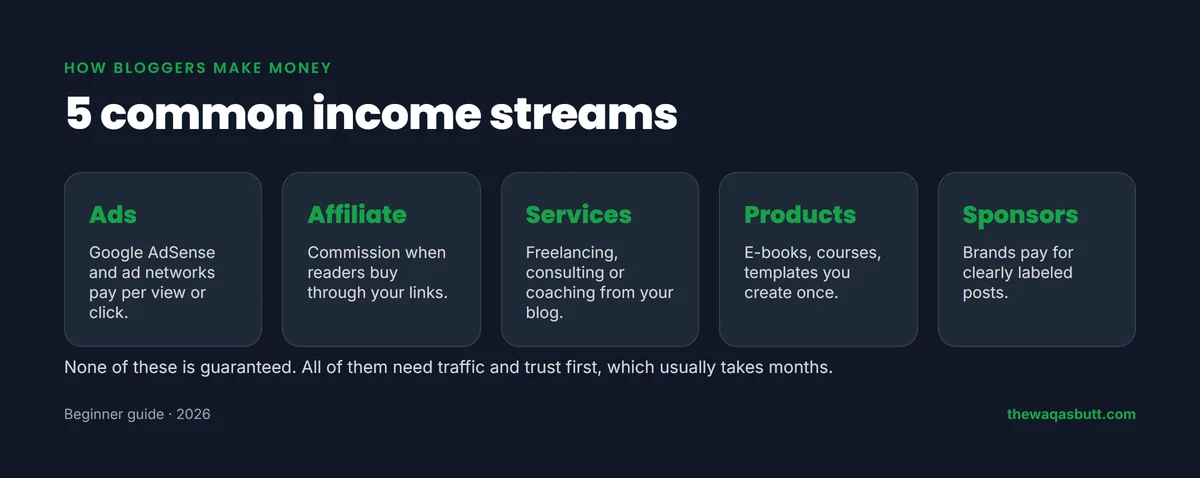
There are five common income streams. Most successful blogs use two or three together.
| Income stream | How it pays | Traffic needed | Good for beginners? |
|---|---|---|---|
| Display ads | Per view or click | High | Easy to add, small earnings at first |
| Affiliate links | Commission per sale | Medium | Yes, with honest reviews |
| Services | Client projects | Low | Yes, often the fastest |
| Digital products | Each sale | Medium | Later, once you have readers |
| Sponsorships | Per post or campaign | Medium to high | Later, and always labeled |
1. Display ads
You show ads, for example from Google AdSense, and earn when people view or click them. It’s easy to set up but usually pays little until you have a lot of traffic.
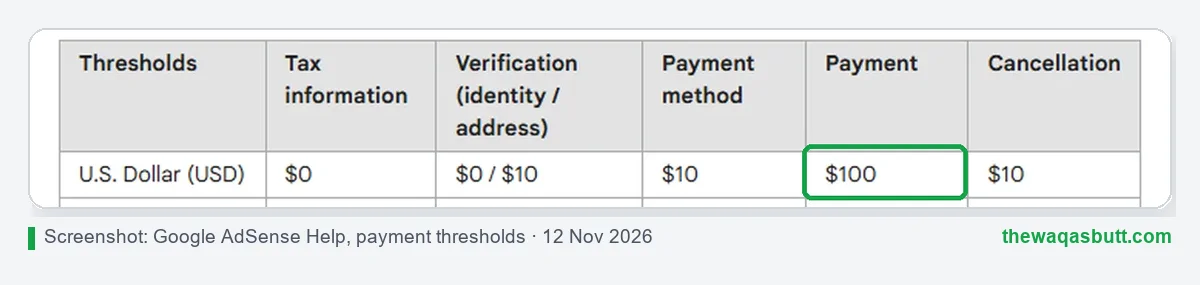
AdSense pays out once your balance reaches the payment threshold, which is $100 for accounts in US dollars, according to Google’s help page.
2. Affiliate marketing
You recommend products and earn a commission when readers buy through your link. This blog uses affiliate links, and I disclose them at the top of every post. Honest reviews matter more than the commission.
3. Services
Your blog shows your skills. Many freelancers use a blog to get clients for writing, design, SEO or development. This often earns faster than ads.
4. Digital products
Once you have readers, you can sell e-books, courses, templates or tools you create once.
5. Sponsorships
Brands may pay you to review or feature their products. These posts must be clearly labeled as sponsored. Never hide a paid deal from your readers.
How long does it take to earn?
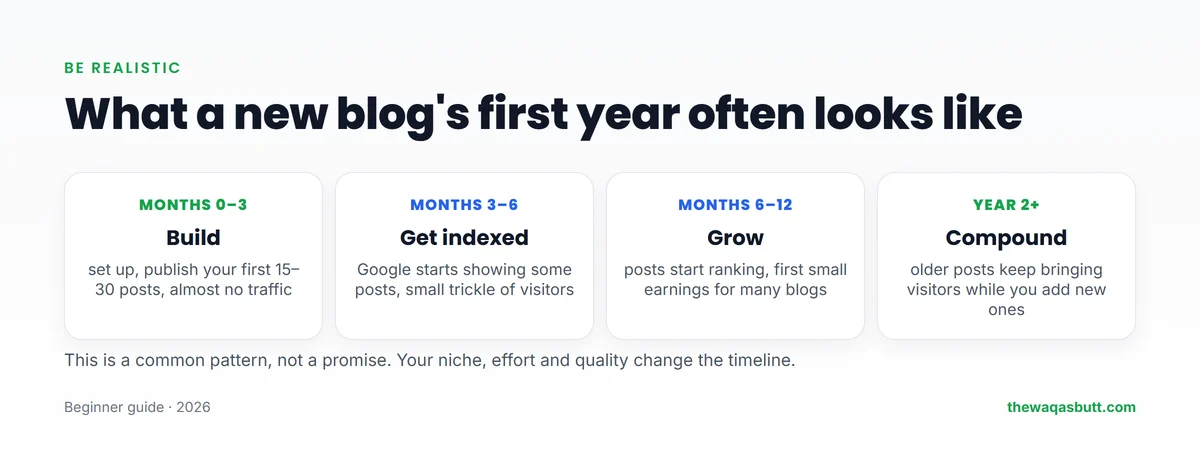
This is the part most guides skip. There’s no fixed timeline, and many blogs never earn much at all.
A common pattern looks like this: the first few months are for building and writing with very little traffic. Google slowly starts showing your posts, and many blogs see their first small earnings somewhere in the first year. Real growth usually comes in year two and later, if you keep publishing.
Treat blogging as a long-term project, not quick money. If you need income this month, freelancing is a better first step.
A simple habit helps more than any tool: publish on a fixed schedule, for example one helpful post every week, and update your best posts every few months. Consistency over a year usually matters more than a burst of twenty posts in the first month.
Is blogging still worth it in 2026?
Blogging is still worth it for many people, but it’s harder than it was a few years ago, and you should know why.
Google now shows AI-written summaries at the top of many searches. A Pew Research Center study published in July 2025 found that users who saw an AI summary clicked a normal search result in 8% of visits, compared with 15% when there was no summary.
So generic posts that only repeat basic facts get fewer clicks. What still works:
- First-hand experience: your own tests, screenshots, results and mistakes.
- Specific audiences: for example, guides written for one country or community, which big global sites ignore.
- Trust and email: readers who know you, subscribe and come back directly.
- More than one channel: a blog plus YouTube or social media, so you don’t depend only on Google.
Blogging from anywhere: what to check in your country
Most “what is blogging” guides are written for US readers. Here’s what to check before you start, wherever you live.
- Getting paid: AdSense and affiliate programs don’t work the same way in every country. Check Google’s AdSense help pages and each program’s terms for your country, including the payment methods and tax forms they support. Make sure your bank account details match your account name exactly.
- Paying for tools in dollars: hosting and domains are priced in USD, so check that your card allows international payments and expect your bank’s exchange rate.
- Local tax rules: blogging income is usually taxable. Ask a local accountant or your tax office how to report it.
- Audience and income: ad earnings depend on where your readers are and what they search. Affiliate links and services often matter more than ads.
- Language: English posts can reach a global audience. Writing in your own language can win a local audience with less competition.
- Choose a real need: pick topics people search a lot but find poorly answered.
Pros and cons of blogging
Pros
- Low cost to start, with a free option to test.
- No coding needed with WordPress.
- Posts can bring visitors for years.
- Builds skills: writing, SEO, marketing.
- Several ways to earn, including services and affiliate income.
- Works well as a portfolio for freelancers.
Cons
- Slow: often months before meaningful traffic.
- No guaranteed income, and many blogs earn little.
- Hosting renewals and tools cost money every year.
- Google changes and AI answers can reduce clicks.
- Needs steady work, week after week.
Who blogging is for (and who it’s not)
Blogging is a good fit if you:
- Enjoy writing or teaching about one topic.
- Can give a few hours a week for at least a year.
- Want a long-term asset, a portfolio or a way to get clients.
- Have real experience or are willing to test things yourself.
It’s probably not for you if you:
- Need money quickly.
- Want to copy or rewrite other people’s content, or let AI write everything without checking it.
- Don’t enjoy writing, and prefer video or speaking. YouTube may suit you better.
How I researched this guide
- Official sources: W3Techs for WordPress usage, the WordPress.org plugin directory, Google AdSense Help pages on payment thresholds and payment methods, and Hostinger’s pricing page, checked on 10–12 November 2026.
- Research: the Pew Research Center’s 2025 study on AI summaries in Google search.
- Competitor guides: I read the top-ranking “what is blogging” articles in the US. Most skip the costs, the drawbacks, the time it takes and the impact of AI. None covered readers outside the US, so I added those.
- My own experience: this site is a WordPress blog on Hostinger, so the setup steps are the ones I use.
Final thoughts
Blogging is simple to understand: you publish helpful posts, people find them, and over time some of them become readers, clients or customers.
It isn’t quick, and it isn’t guaranteed. But if you pick a topic you know, write from real experience and stay consistent, a blog can become one of your most valuable online assets.
If you’re ready, you can start your blog with Hostinger and use code SK20 at checkout. For more tools I use, see my resources page.
FAQ
What is blogging in simple words?
Blogging means regularly publishing articles, called posts, on a website about a topic. People find the posts through search or social media, and the blogger can earn through ads, affiliate links, services or products.
Is blogging free?
You can start for free on Blogger with a blogspot.com address. A self-hosted WordPress blog needs a domain and hosting; Hostinger’s Premium plan was $1.99 a month on a 48-month term during a November 2026 sale.
How do beginners make money from blogging?
The most common ways are display ads such as Google AdSense, affiliate links, offering services, selling digital products and clearly labeled sponsorships. All of them need traffic and trust first.
How long does it take to make money from a blog?
There is no fixed timeline. Many blogs see their first small earnings within the first year, and real growth usually takes longer. Some blogs never earn much.
Do I need coding skills to start a blog?
No. WordPress and Blogger let you write and publish posts with a visual editor. Coding can help later, but it isn’t needed to start.
Is blogging still worth it with AI?
Yes for many people, but generic posts get fewer clicks because Google shows AI summaries. Posts with first-hand experience, a specific audience and an email list still work well.
Can I get paid by AdSense in my country?
It depends on your country. Google’s AdSense help pages list the supported countries and payment methods, so check them first. Payments are made once your balance reaches the payment threshold, which is $100 for US dollar accounts.
Want honest, step-by-step guides for earning online? Join my newsletter.